
Introduction
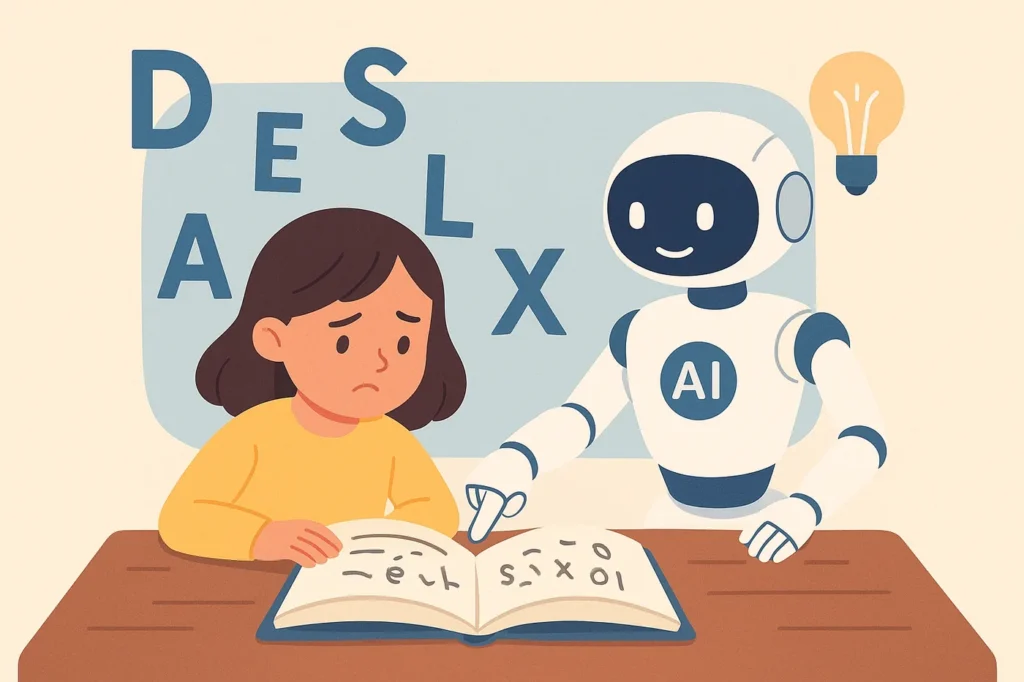
Artificial intelligence has emerged as a transformative force in educational technology, particularly in addressing the complex learning needs of students with dyslexia. This neurodevelopmental reading disability affects approximately 10-15% of the global population, creating significant barriers to academic achievement and personal development. Traditional assessment methods often rely on subjective evaluations and standardized tests, frequently resulting in delayed or inaccurate diagnoses. However, the integration of AI technologies is revolutionizing how educators detect, understand, and support dyslexic learners through innovative approaches that leverage machine learning, computer vision, and natural language processing. The convergence of artificial intelligence with dyslexia research represents a paradigm shift from reactive interventions to proactive, personalized support systems that can identify learning difficulties early and provide tailored educational experiences.
Recent advancements in AI-powered diagnostic tools demonstrate unprecedented accuracy in detecting dyslexia through analysis of handwriting patterns, eye movements, and speech characteristics. Machine learning algorithms can now identify subtle indicators of dyslexia that may escape traditional screening methods, offering hope for earlier intervention and improved outcomes. The proliferation of AI applications in education has grown exponentially, with the market expanding from $3.99 billion in 2023 to $5.57 billion in 2024, representing a remarkable 39.7% growth rate. This rapid expansion reflects the increasing recognition of AI’s potential to address educational inequities and provide personalized learning solutions for diverse learners.
Early Detection and Diagnosis Through AI Technology
Artificial intelligence has fundamentally transformed dyslexia detection by introducing sophisticated analytical capabilities that surpass conventional assessment methods. Machine learning models, particularly Random Forest and Gradient Boosting algorithms, demonstrate remarkable success in predicting dyslexia through children’s interactions with web-based language games. These AI-driven approaches have demonstrated their ability to detect subtle, previously overlooked patterns, providing a deeper understanding of dyslexia’s cognitive markers. The implementation of convolutional neural networks (CNNs) for handwriting analysis represents a significant breakthrough, with studies achieving up to 99.5% training accuracy in distinguishing dyslexic handwriting patterns from typical samples.
Eye-tracking technology combined with machine learning algorithms has emerged as a particularly promising diagnostic approach. Research utilizing convolutional neural networks to analyze eye movement patterns during reading tasks has achieved an impressive 96.6% accuracy in dyslexia detection, significantly outperforming traditional assessment methods. These systems process entire eye-tracking sequences without explicit feature extraction, allowing artificial intelligence to discover optimal diagnostic patterns automatically. The holistic approach eliminates potential human error in feature selection while maintaining high diagnostic precision.
Advanced diagnostic frameworks now incorporate multiple data modalities, including speech assessment, neuroimaging, and behavioral patterns. Deep learning models analyze speech characteristics to identify language-related difficulties, while functional magnetic resonance imaging (fMRI) combined with 3D CNNs enables automatic recognition of dyslexia-associated neural patterns. Using predictive modeling and statistical resampling techniques, researchers have developed classification models from eye tracking records less than one minute in duration, demonstrating 96% accuracy with balanced sensitivity and specificity. This multi-modal approach provides comprehensive diagnostic capabilities that consider the complex, heterogeneous nature of dyslexia.
Personalized Learning and Intervention Systems
AI-powered personalized learning platforms represent a revolutionary approach to dyslexia education, offering customized educational experiences that adapt to individual learners’ unique challenges and preferences. Intelligent Tutoring Systems (ITS) specifically designed for students with learning disabilities demonstrate remarkable effectiveness in delivering personalized educational materials that align with learners’ cognitive profiles. These systems employ Boolean and Fuzzy min-max neural network architectures to identify learner characteristics, enabling the delivery of truly individualized educational experiences that adjust dynamically to student progress.
Multimodal interactive applications leverage machine learning techniques to create engaging learning environments that support dyslexic students in fundamental skills such as color and letter recognition. AI-driven systems can adapt in real time to students’ progress, suggesting activities or content that suit their pace and comprehension levels, ensuring that educational content remains appropriately challenging without causing frustration or disengagement. These adaptive systems provide real-time feedback and adjust learning strategies based on predictive analytics, creating responsive educational environments that evolve with learner needs.
Language learning models enhanced with artificial intelligence offer comprehensive support for dyslexic students, providing immediate feedback and addressing specific challenges in reading and writing. AI-powered assessment tools generate personalized reports that enable teachers to monitor student progress effectively while identifying areas requiring additional support. The integration of augmented reality technologies with computer vision creates immersive learning experiences that help children develop vocabulary through interactive gameplay. These technological innovations foster engagement while addressing the diverse learning styles and preferences characteristic of dyslexic learners.
Speech and Language Processing Applications
AI-powered speech and language processing systems have transformed accessibility and inclusivity in dyslexia education by providing sophisticated tools for literacy skill development. Generative neural networks create customized audio content for various languages, enabling teachers to accelerate learning processes for children with dyslexia through personalized auditory support. These systems analyze pronunciation patterns and provide targeted feedback to improve speech clarity and reading fluency. AI-driven applications such as CollectiAR, an augmented reality mobile game, foster engagement by using computer vision to help children learn vocabulary in a more interactive way.
Natural language processing technologies enable systematic English sentence learning at individualized paces, allowing dyslexic students to develop reading comprehension skills through structured, adaptive approaches. Mobile applications incorporating speech recognition APIs facilitate reading and pronunciation skill development by providing immediate feedback on verbal responses. These tools create supportive learning environments where students can practice without fear of judgment while receiving constructive guidance for improvement.
Advanced speech processing systems offer comprehensive language support through text-to-speech conversion, automated captioning, and real-time translation capabilities. LLMs have made possible a variety of new translation, caption, lip reading, and speech recognition tools, significantly expanding accessibility options for dyslexic learners. The integration of multiple language processing modalities ensures that students can access educational content through their preferred learning channels while developing confidence in verbal communication skills.
Brain Imaging and Neuroimaging Analysis
Artificial intelligence applications in neuroimaging research provide unprecedented insights into the neural mechanisms underlying dyslexia, enabling more targeted therapeutic interventions. Machine learning models, including Logistic Regression, Support Vector Machines, and Gradient Boosting, effectively analyze QEEG signals to provide real-time neurofeedback training that enhances reading skills. Auto Train Brain software utilizes these ML models to effectively aid children with dyslexia by providing real-time neurofeedback and enhancing reading skills, demonstrating the practical application of AI in neurological intervention.
Convolutional neural networks achieve remarkable accuracy in recognizing EEG signals that differentiate children with and without dyslexia, contributing significantly to understanding neural correlates of reading difficulties. These advanced classification systems process complex neuroimaging data to identify patterns associated with dyslexia, facilitating the development of targeted therapies and educational strategies. Machine learning algorithms extract neural components during Rapid Automatized Naming tasks, enhancing analysis of cognitive processes associated with dyslexic patterns.
Functional magnetic resonance imaging combined with 3D CNNs demonstrates the feasibility of using deep learning for automatic dyslexia recognition through neuroimaging analysis. Event-Related Potential signal analysis using machine learning techniques reveals neurological differences between dyslexic and typical readers, providing valuable insights into the cognitive mechanisms underlying reading difficulties. These studies highlight the transformative potential of AI in brain imaging and neuroimaging analysis for dyslexia research, paving the way for personalized interventions based on individual neural profiles.
Data Quality and Accessibility Challenges
The development of robust AI systems for dyslexia support faces significant challenges related to data quality and accessibility that impact both effectiveness and equity. A primary concern in the development of AI models for dyslexia support is the scarcity and inconsistency of data used for training, requiring extensive time and effort that can significantly hinder the advancement of effective AI tools. Dataset imbalances, where non-dyslexic samples predominate over dyslexic ones, create models that may perform well on majority classes while failing to accurately identify dyslexia in practice.
Language complexity presents additional challenges for AI systems, particularly with languages featuring intricate scripts such as Arabic and Chinese. These linguistic variations necessitate specialized algorithms and datasets to handle unique features effectively, requiring significant research and development investments. The integration of AI-powered dyslexia tools into existing educational frameworks is a complex process that demands considerable investment in technological infrastructure and personnel training. Educational institutions must adapt their systems to accommodate new technologies while ensuring educators receive adequate training to implement these tools effectively.
Accessibility barriers significantly impact the equitable distribution of AI-powered dyslexia support, particularly affecting individuals in low-income and rural areas. The existing digital divide disproportionately affects individuals in low-income and rural areas, serving as a formidable barrier, limiting access to the technology and resources necessary for utilizing AI-powered dyslexia tools. Financial constraints, inadequate technological infrastructure, and limited technical proficiency create compound barriers that exclude those who would benefit most from these innovations. The design complexity of many AI systems overlooks the needs of users in less privileged settings, resulting in tools that are difficult to navigate and inaccessible to individuals without necessary technical support.
Bias and Transparency Concerns
Algorithmic bias represents a critical challenge in AI-driven dyslexia assessments, directly impacting diagnostic accuracy and reliability. Issues such as homogeneous training datasets that fail to capture the diversity of the population with dyslexia can lead to unequal performance across different demographic groups, resulting in inaccurate assessments and potential discrimination. Biased data can skew results, particularly when handwriting recognition systems encounter variations in image quality, character orientation, or writing styles that weren’t adequately represented in training datasets.
The opacity of deep learning models creates significant transparency challenges that undermine user confidence and trust. Deep learning models lack transparency, making it challenging to interpret how specific inputs affect predictions, which is exacerbated by class imbalances in datasets and variability in signal quality. Without clear explanations of AI decision-making processes, educators, parents, and students may question the reliability and fairness of AI-driven assessments, potentially hindering adoption and acceptance of these technologies.
Including disabled people in conversations about AI fairness and the development process is key to creating truly accessible and unbiased systems. The exclusion of individuals with disabilities from AI development processes perpetuates systemic biases and limits the effectiveness of these tools for their intended users. Addressing these challenges requires comprehensive approaches that prioritize diverse representation in development teams, extensive bias testing, and transparent algorithmic processes that build user confidence and trust.
Balancing AI Support with Human Expertise
The integration of AI technologies in dyslexia education must carefully balance automated support with essential human expertise to maintain educational effectiveness and ethical standards. A primary concern is the potential for over-reliance on AI tools, which can diminish the critical role of teachers and their professional judgment. Excessive dependence on AI-generated insights may lead to decreased critical thinking and adaptability in teaching practices, potentially undermining the nuanced understanding that educators bring to the learning process.
Successful AI integration requires complementary approaches that enhance rather than replace traditional teaching methods. Hybrid approaches that combine machine learning with human insight provide personalized support to students with dyslexia while emphasizing the potential for AI to augment rather than replace human evaluators. This collaborative model ensures that educators retain their essential roles while leveraging AI capabilities to improve diagnostic accuracy and intervention effectiveness.
The challenge of integrating AI tools within existing educational frameworks without disrupting established teaching methods requires careful planning and implementation strategies. Teachers remain irreplaceable in building emotional connections and providing the human elements of empathy, encouragement, and personal connection that are vital in education. Maintaining human oversight ensures that AI tools align with ethical standards and educational values while preserving the critical interpersonal aspects of teaching that foster student growth and confidence.
Future Directions and Recommendations
The advancement of AI applications in dyslexia education requires strategic approaches that address current limitations while expanding accessibility and effectiveness. Research priorities should focus on developing multimodal diagnostic approaches that combine neuroimaging, eye-tracking, and physiological data analysis to improve diagnostic accuracy and enable earlier interventions. Future research should focus on creating systems that are linguistically and culturally relevant, particularly for non-English-speaking and multicultural contexts, ensuring that AI tools serve diverse populations effectively.
The development of affordable, user-friendly AI systems that function effectively on low-tech devices represents a critical need for ensuring equitable access to dyslexia support. AI systems must be created by diverse people and trained on diverse datasets to avoid inaccuracies and ensure true representation, particularly for students with disabilities. This inclusive approach to development ensures that AI tools address the needs of underrepresented populations while avoiding the perpetuation of existing biases and inequalities.
Interdisciplinary collaboration between AI experts, educators, cognitive scientists, and clinicians is essential for refining and applying AI interventions effectively. Training programmes for educators should be implemented to balance AI-generated insights with professional judgment, creating a hybrid approach that maximises the benefits of both AI and traditional educational methods. Comprehensive ethical frameworks must guide the responsible deployment of AI in dyslexia education, addressing privacy, transparency, bias, and psychological effects on students. Longitudinal studies investigating the long-term impact of AI-driven interventions on cognitive and educational development will provide crucial evidence for optimizing these technologies and ensuring sustainable benefits for dyslexic learners.
Conclusion
The integration of artificial intelligence in dyslexia research and education represents a transformative advancement that holds unprecedented potential for improving learning outcomes and educational equity. Through sophisticated applications in early detection, personalized learning, speech processing, and neuroimaging analysis, AI technologies offer innovative solutions to longstanding challenges in dyslexia support. Machine learning algorithms demonstrate remarkable accuracy in diagnostic applications, while personalized learning systems provide adaptive educational experiences that respond to individual learner needs. The rapid growth in AI educational applications, evidenced by significant market expansion and increasing research output, reflects growing recognition of these technologies’ transformative potential.
However, the successful implementation of AI in dyslexia education requires careful attention to significant challenges including data quality, accessibility, bias, and the balance between technological support and human expertise. Addressing these challenges demands comprehensive strategies that prioritize inclusivity, transparency, and ethical considerations while fostering interdisciplinary collaboration among stakeholders. The development of culturally relevant tools, affordable accessibility options, and robust ethical frameworks will be essential for realizing AI’s full potential in supporting dyslexic learners across diverse contexts.
The future of AI in dyslexia education lies in creating integrated systems that combine technological innovation with human expertise to provide comprehensive, personalized support for all learners. Through continued research, thoughtful implementation, and commitment to equity and inclusion, artificial intelligence can fundamentally transform dyslexia education, creating more effective, accessible, and supportive learning environments that enable every student to achieve their full potential. The convergence of AI capabilities with educational expertise offers unprecedented opportunities to address the complex needs of dyslexic learners while advancing our understanding of learning differences and optimal intervention strategies.